 Thrive: Alaska
Devlog 01: Into the valley
Thrive: Alaska is a homesteading survival game set in the present day, a few weeks after a severe solar storm takes down the power grid. This first note covers where the game will take place, how it will look and feel, and the first big decisions about how you learn and make things.
A real valley
We looked at a lot of Alaska before settling on a creek valley near Sutton in the Matanuska Valley. The terrain comes straight from USGS 3DEP elevation data at one-metre detail: 4 km on a side, with 11.3 km² of it playable. Glacial terraces give it broad, flat benches where people would actually build. Water is placed the way water would really sit: a creek, a valley lake held back by a beaver dam, ponds, and a wetland where the water table meets the surface.
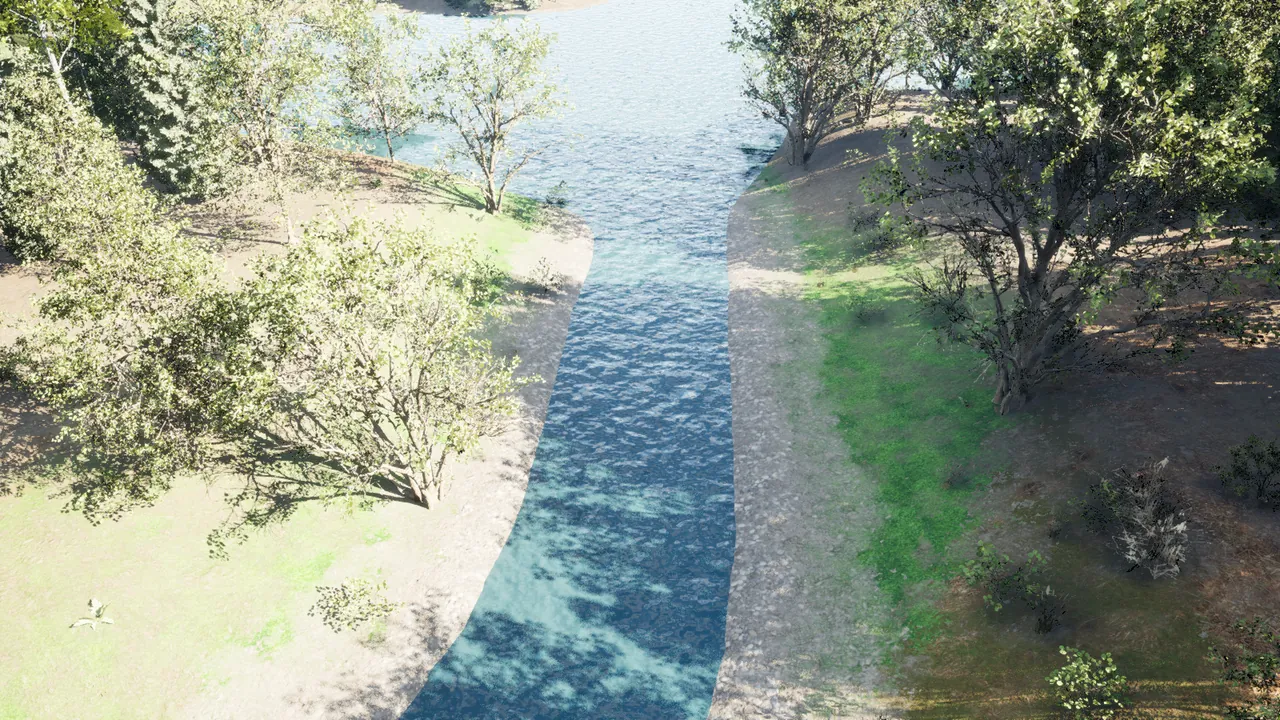
All of the playable land is open from the start. New players can settle anywhere, and later updates add landmarks, salvage sites and events to the land that's already there instead of opening new ground.
Everything is player-made
There's no shop. Every item in the game is made by a player, so what you can make depends on what you know:
- Skill practice unlocks most recipes. Skills are learned by doing, and failure teaches too.
- Blueprints come from taking salvage apart, from being taught, or from trading with groups outside the valley.
- Salvaged books carry the advanced know-how, such as canning or wiring.
Your firsts are written into a field journal. Sleeping in a bed banks a rested skill bonus for the next day's work. Five attributes grow slowly beside your skills, from 20 up to 100, as you raise the skills linked to them: Strength (carry weight), Endurance (stamina use and cold tolerance), Dexterity (fine work and archery), Reason (learning speed, study speed and the action queue) and Quickness (reaction and aiming).
The first item list has 266 entries, from birch bark to an alternator, each with its own icon. You can browse it in the wiki.
A quiet interface
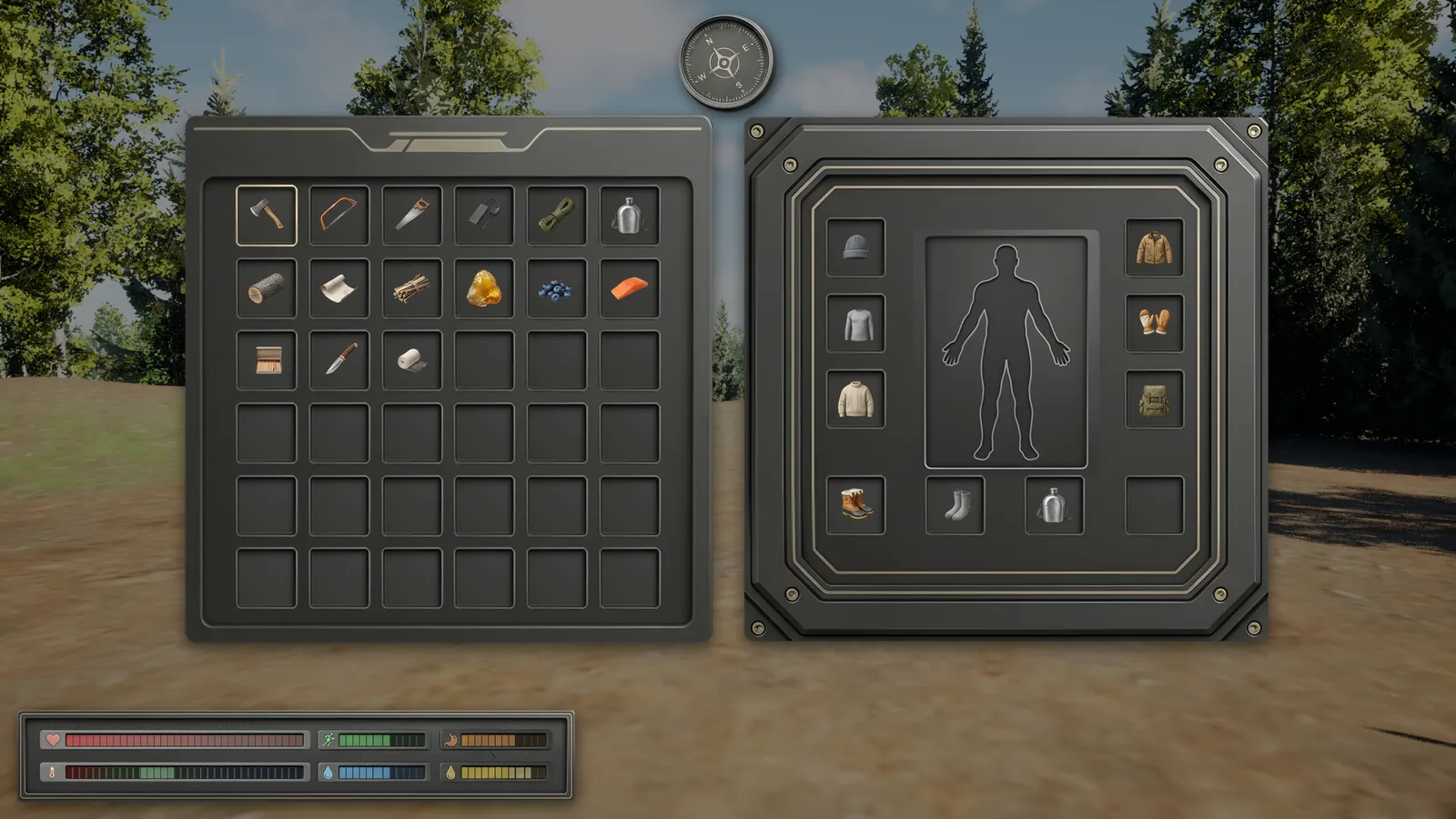
The HUD is a compass dial and six small vitals on one gunmetal plate: health, stamina, food, warmth, water, and a yellow bar for the rested skill bonus you've banked (up to 20 hours). Everything else stays off screen until you need it.
Rules for big servers
Servers hold 1 to 50 players. PvP and firearms are both off by default; admins can turn them on, along with many other rules such as day length, raids and what you lose on death.
Next
Pre-production continues: a 50-player network test, the building grid, and dressing the whole valley to one consistent standard. See the roadmap.